
Intergroup Contact Research Network News - February 2026
Joint ICRN & Hamburg Meeting 2026, Contact Colloquium series, Recent Advances and more ...

Welcome to the February 2026 Edition of the ICRN Newsletter!
In this issue, we share exciting updates from across the network, including details about the upcoming Joint ICRN & Hamburg Group Meeting in summer 2026, highlights from our Contact Colloquium series and upcoming talks, and announcements of new opportunities and events relevant to our community. We also showcase recent publications by ICRN members, spotlight research impact beyond academia, and feature a summary of new advances in contact research
As our global community continues to grow, we’re glad to keep you connected through these termly newsletters. If you have suggestions or items to share in future editions, we’d love to hear from you.
Feel free to share this newsletter with colleagues who may be interested in joining our network.
Happy reading!
Joint ICRN & Hamburg Group Meeting on Intergroup Contact 2026
We are delighted to announce that the International Contact Research Network and the Hamburg EASP-sponsored meeting group on Advances in Intergroup Contact will join forces to host a joint satellite meeting on intergroup contact in summer 2026.
The meeting will take place immediately after the EASP General Meeting (July 2026), making it easy to attend both events.
The joint meeting is being organised by Maria-Therese Friehs, Patrick Kotzur, and Emine Bilgen as lead organisers, together with Stefania Paolini, Libby Drury, Rita Guerra, Lukas Wallrich, Mathias Kauff, Sarina Schäfer, Oliver Christ, and Shelley McKeown Jones as co-organisers. Maria-Therese Friehs, Oliver Christ, and Shelley McKeown Jones organised the original EASP Small Group Meeting in Hamburg on which this event builds.
🗓️ Dates & Locations
The joint meeting has been designed to align smoothly with key conferences relevant to our field:
30 June – 4 July 2026: EASP General Meeting · Strasbourg, France
5 July (afternoon) – 6 July 2026: Joint ICRN/Hamburg Group Meeting · Campus Karlsruhe, FernUniversität in Hagen, Germany
(with an optional small-group work day on 7 July)16 – 19 July 2026: ISPP Annual Meeting · Newcastle Upon-Tyne, UK
📍 The Karlsruhe campus is less than 2 hours by direct international high-speed train from Strasbourg and conveniently connected to Frankfurt International Airport.
🎯 Objectives & Programme
The meeting aims to advance intergroup contact research, foster collaboration, and strengthen our international community. The programme will include two main parts:
Core Summit (Sunday afternoon – Monday afternoon)
keynote address
research presentations
ICRN member meeting
Open working and collaboration space (Monday afternoon – Tuesday afternoon, optional)
Time for small-group work, collaborative meetings, project planning, and networking. Working groups formed during the 2024 Hamburg meeting will also have an opportunity to reconnect.
If you plan to use the “open working and collaboration space” for a meeting, please inform Therese (maria-therese.friehs@fernuni-hagen.de) before March 8th to discuss your idea. Please indicate if the meeting you plan will be open for other ICRN Summit attendees to participate in and how many participants you expect. For open meetings, we will subsequently add this information in the registration process.
💬 Format & Fees
Format: Hybrid (in-person + online participation possible)
Fees: No conference fee
However, food and beverages will not be provided during the meeting. The summit will take place in Karlsruhe city centre, so you will have ample opportunities to get coffee, tea and snacks in close proximity. Also, a variety of accommodations for different budgets are available close-by.
✈️ Travel Support
We are currently applying for funding to support:
early-career researchers
participants without institutional funding
scholars from structurally disadvantaged countries
Further information will follow.
🔜 Registration
Registration and the call for submissions will open in March 2026.
Attendance is open to both ICRN members and non-members, regardless of whether they attended the Hamburg small-group meeting or the EASP General Meeting.
Contact Colloquium: Season Update & Upcoming Talks
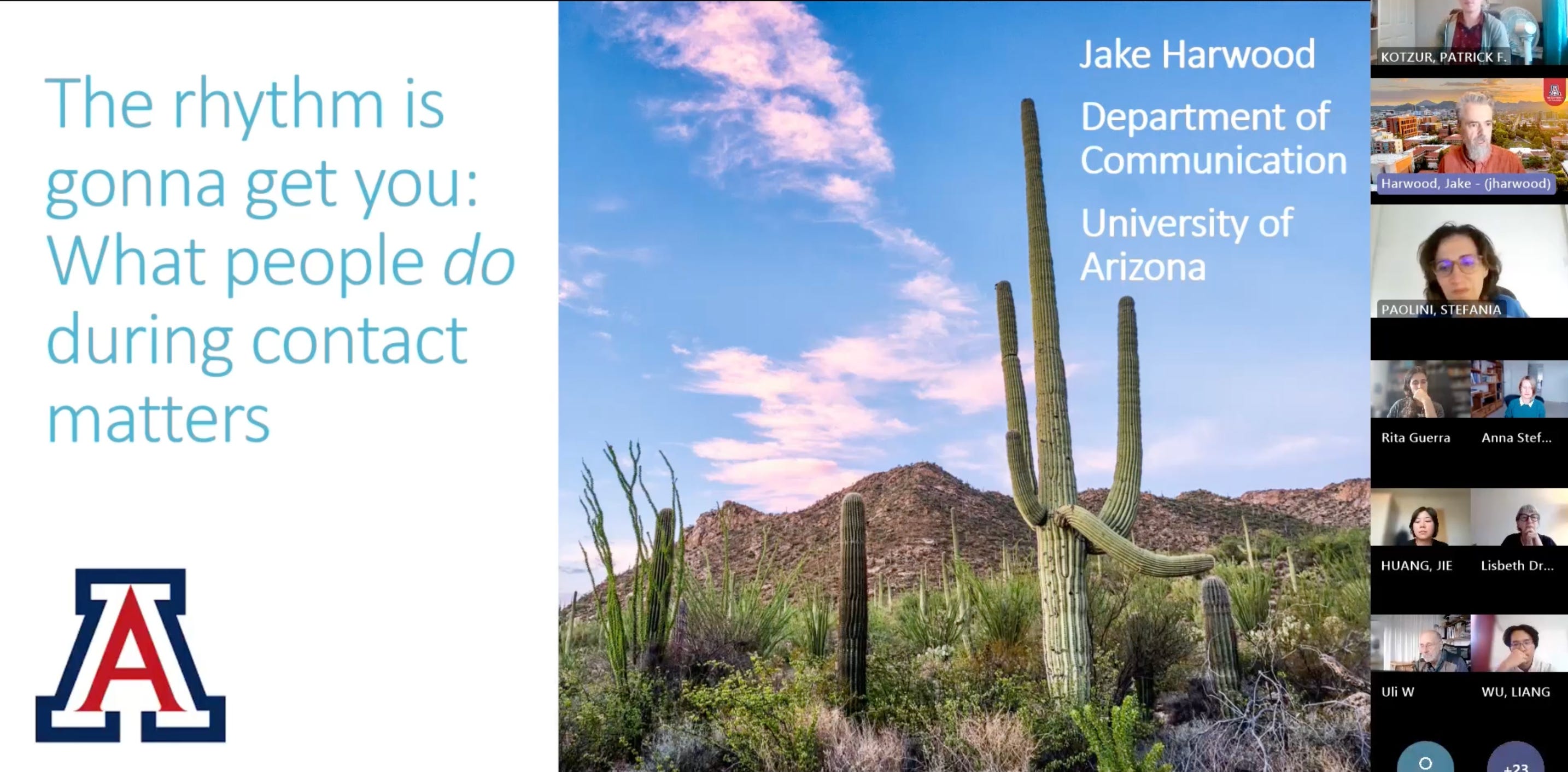
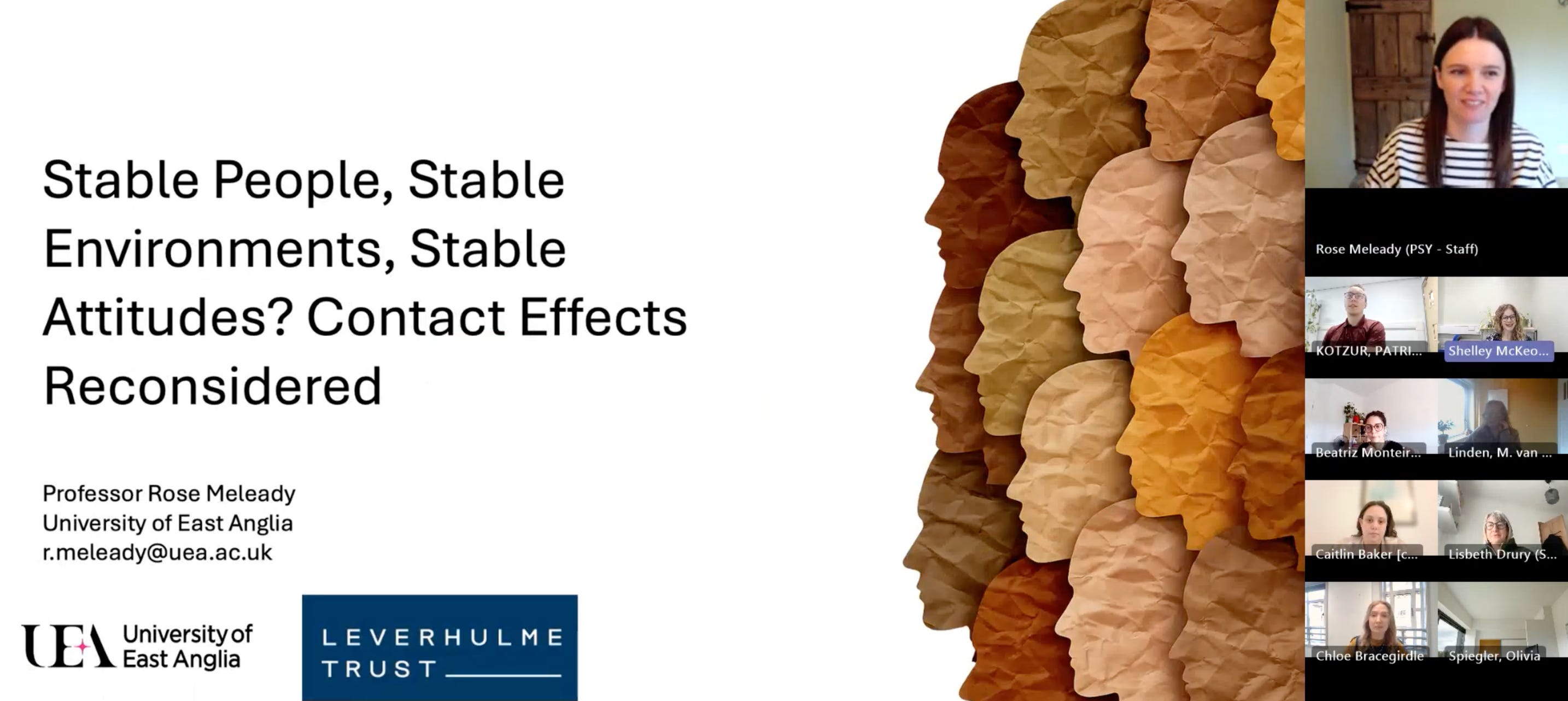
Since our season launch in October, three talks have already taken place:
Prof. Jake Harwood (University of Arizona)
The rhythm is gonna get you: What people do during contact matters
Dr. Negusu Akliku (Destiny Ethiopia Initiative)
Building peace before the polls: Political party dialogues to prevent electoral violence in Ethiopia
Discussant: Julia Schreiber (University of Sussex)
Prof. Rose Meleady (University of East Anglia)
Stable people, stable contexts, stable attitudes? Contact effects reconsidered
Discussant: Prof. Shelley McKeown Jones (University of Oxford)
We thank our speakers and discussants for three engaging and thought-provoking sessions, and our audience for the lively discussions that followed each talk.
You can find recordings of some past talks on our YouTube channel.
Upcoming Colloquium
Friday, 27 February 2026, 12.00–1.00 PM (UK Time)
ICRN Contact Colloquium (online)
Dr. Fiona Kazarovytska (University of Mainz)
Contact as Collective Action: Positive and Negative Contact Experiences of Disadvantaged Group Members
Intergroup contact programs worldwide strive to combat prejudice by promoting encounters between socially advantaged and disadvantaged groups. Despite their prevalence, little is known about how disadvantaged group members themselves experience participation in such programs. We present qualitative field data from the German contact program Meet a Jew. In this program, Jewish volunteers engage in dialogue with attendees and share insights into their Jewish life to address antisemitism. Drawing on N = 450 volunteer responses (age range: 16-77 years) collected over five years (2020-2025), we examine the positive and negative experiences of volunteers with the arranged encounters. A qualitative content analysis shows that volunteers experienced contact as positive when their engagement and perspectives were met with interest, their efforts were socially recognized, and they perceived their engagement as effective in contributing to social change. However, volunteers also reported negative experiences, including disinterest from attendees, interference by authorities, and various conflicts. By providing the perspective of Jewish individuals who are both targets of prejudice and actors of prejudice-reduction, we address the understudied perspective of disadvantaged group members who engage in contact interventions as agents of collective action. We discuss how our work contributes to contact theory and advances research on social change.
Max Primbs (Radboud University)
A big data approach to intergroup contact
Most intergroup contact is brief and superficial – two random people are more likely to share a public space than they are to have a deep and meaningful conversation. Yet, most previous intergroup contact research has either focused on contact in artificial settings or relied on self-reported contact measures. In this talk, I present a large-scale investigation of how everyday contact relates to racial bias across the U.S., using GPS data from 9.6 million people and attitude data from 1.3 million people.
Discussant: Dr. Maria-Therese Friehs (FernUniversity in Hagen)
Registration details and information about upcoming Contact Colloquium sessions are available here.
We look forward to welcoming you to the upcoming sessions.
Announcements
📣 We’re Recruiting a Social Media Officer (Voluntary)!
Here at the ICRN, we are looking for a Social Media Officer to help shape our online presence and join our Executive Committee. This is a great opportunity to build experience in research communication, expand your professional network, and play a key role in supporting our international community.
Interested?
Please send a brief expression of interest (skills + motivation) to Libby Drury (l.drury@bbk.ac.uk) by 4 March 2026.
Conference Announcement: Human – Climate – Sustainability
Michèle Denise Birtel is co-organising the first conference of the German Psychological Society’s Interest Group Human – Climate – Sustainability. The conference, titled Human, Responsibility, Climate Crisis: Psychology in Societal Dialogue, will take place on 24–25 March 2026 in a hybrid format (in person in Hannover, Germany, and online via Zoom).
Registration is open until 1 March 2026, and the in-person participation fee is €10. Click here for details.
PhD Opportunity: Inter-Minority Relations in Western Europe
Applications are open for a fully funded 48-month PhD position at Utrecht University as part of the ERC-funded INTER-MIN project. The project aims to map inter-minority relations across ethnic groups and reveal the mechanisms underlying these relations, using advanced quantitative analyses supplemented by focus groups. Application deadline: 8 March 2026.
Research Impact & Engagement
Pier-Luc Dupont and Angelique Retief, with contributions from Shelley McKeown Jones, Japheth Monzon, and Lella Nouri, have released a new policy brief titled Workplace Diversity and Anti-Racist Change. The brief outlines evidence-based strategies for reducing structural inequalities and fostering inclusive workplaces. Please click here to read it.
Recent Contact Publications by ICRN Members
ICRN members have continued to publish a wide range of exciting contact research. Below we highlight a few papers that caught our attention, to see more click here.
Asimovic, N., & Ditlmann, R. K. (in press). Cross-group friends and feeling empowered in intergroup contact programs: Mediating pathways and practical strategies for divided societies. Journal of Social and Political Psychology.
Birtel, M. D., & Tausch, N. (2025). Brexit and wellbeing: Strained intergroup relations and positive intergroup contact predict wellbeing of Remainers and Leavers post Brexit. Journal of Applied Social Psychology, 56(2), 131-144 https://doi.org/10.1111/jasp.70041
Marinucci, M., Schaefer, C. D., Dupont, P., Manley, D., Taylor, L. K., & McKeown, S. (2026). Desegregating spaces: The interplay between ecological intergroup contact and GPS ‐traced spatial segregation among youth in two UK cities. British Journal of Social Psychology, 65(1), e70043. https://doi.org/10.1111/bjso.70043
Paolini, S., Dixon, J., Kotzur, P. F., Friehs, M. T., Bracegirdle, C., Lauterbach, A., Koebrich, J., Graf, S., Kauff, M., Stefaniak, A., Wright, S. C., Barlow, F. K., Luebbering, K., & Harwood, J. (2026). Towards a habit-rupture model of intergroup contact in everyday settings. Nature Reviews Psychology, 1-16. https://doi.org/10.1038/s44159-025-00523-0 (Paper accessible here: https://rdcu.be/e0Vo8)
van der Linden, M., Politi, E., & Dangubić, M. (2025). The ties that bind and break: A natural experiment on the role of (in)stability in local and transnational social ties for loneliness among refugees. Journal of Refugee Studies, feaf064. https://doi.org/10.1093/jrs/feaf064
Yin, J., Liu, S., Lee, S. W., Kitsios, A., Gillies, M., Birtel, M. D., Farmer, H., & Pan, X. (2025). Immersive intergroup contact: Using virtual reality to enhance empathy and reduce stigma towards schizophrenia. IEEE Transactions on Visualization and Computer Graphics, 31(11), 9656-9666. https://doi.org/10.1109/TVCG.2025.3616759.
Other Recent Publications by ICRN Members
Baker, C., & Hall, G. (2025). Putting each other in a box: Legacies of categorisation and racial prejudice in everyday life: Supplemental case study to Psychology. In N. Holt, A. Bremner, & M. Vliek (Eds.), Psychology: The Science of Mind and Behaviour (5th ed.). Taylor & Francis.
Haines, E.A., Thomas, E.F., Wenzel., M. (2026). Agreeing to disagree: When do superordinate identities facilitate competing opinion-based groups to work through intergroup conflict? British Journal of Social Psychology. 65, e70049. https://doi.org/10.1111/bjso.70049
If you’d like to highlight one of your recent publications in a future issue, please email us with the full citation (APA style preferred) and a link to the article or preprint. We aim to keep this section concise while showcasing a diverse range of member contributions
Recent Advances in Contact Research
Summaries by Emine Bilgen.
Cultural Humility: A Catalyst for Increasing Future Contact Intentions
This research examines whether cultural humility can foster greater willingness to engage in future intergroup contact. Cultural humility refers to an interpersonal stance marked by openness, self-reflection, and awareness of power and status differences.
Across three studies (one cross-sectional and two experimental), the authors show that individuals higher in cultural humility report stronger intentions to seek future contact with outgroup members. Importantly, cultural humility can be experimentally induced through brief reflective exercises, leading to increased contact intentions compared to control conditions.
Mediation analyses suggest that cultural humility promotes contact primarily by reducing perceived threat, rather than by increasing empathy. Intergroup anxiety mediated the association only in the correlational study but not in the experimental studies. This suggests different psychological pathways may operate depending on whether cultural humility is dispositional or situationally activated.
Overall, the findings position cultural humility as a promising micro-level antecedent of intergroup contact, offering a practical and easily implementable tool for preparing individuals for meaningful intergroup engagement.
Garau, T., C. L. Destro, M. Rullo, S. Syropoulos, F. Prati, and E. P. Visintin. 2026. Cultural Humility: A Catalyst for Increasing Future Contact Intentions. Journal of Applied Social Psychology 56: 5–17. https://doi.org/10.1111/jasp.70034.
Do you have feedback on the newsletter, or anything you want to share? Email us: emine.bilgen@btu.edu.tr
Want to join the Network? Check our webpage